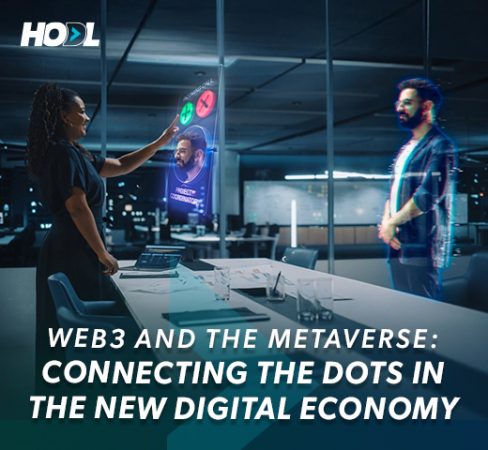
In the past few years, the conversation about a decentralised future would eventually raise the topic of metaverse and web3. The internet as we know it is transitioning away from the old centralised system towards a more democratised system that is driven by web3 solutions and metaverse applications.
With social media, the way we used to communicate with each other changed. But with web3 and metaverse our interaction has evolved from just the standard texts towards an immersive experience where our digital avatars are attending a concert, or shopping at the mall while owning items by exchanging digital assets or Non-Fungible Assets (NFTs).
As new trends are emerging and the internet democratising, global economies are also becoming digital. Through this blog, we are exploring what’s next for the metaverse and how Web3 can help it become an integral part of our digital lives.
Decentralised Economies: Empowering Users to Own the Digital World
In the present-day digital space where social media platforms like Facebook, Google, Amazon and more have strict control over our data. In the decentralised world of web3 and metaverse, users will be able to regain control of their digital lives. Today users can not only own their data and assets but are able to verify their authenticity through blockchain based networks.
Whether through NFTs, virtual real estate, or in-game currencies, Web3 gives the users an opportunity to not just be a mere participant but to profit in the digital economic system. Since blockchain networks are at the core of web3 based solutions, the users can easily move these assets across networks. The decentralised nature of web3 solutions make it easier for the users of in the metaverse to engage with each other in a truly open ecosystem.
The evolution of Play-to-Earn (P2E) models allows users to earn these assets and cryptocurrencies by completing activities in the digital world adding real-world value from in-game activities.
The decentralised digital space today empowers community and making them active contributors in the metaverse. With Decentralised Autonomous Organisations (DAOs), users can voice their opinions on crucial policies while shaping their virtual world.
AI and the Metaverse: Making Experiences Smarter and More Personal
Artificial Intelligence (AI) integration in the existing digital space is transforming operations and solutions. In the metaverse, these solutions are not only powering digital avatars and reshaping the metaverse but are creating a more personalised experience that evolves with each interaction making it more lifelike and adapting to the user’s interactions and behaviours.
As pre-programmed scripts are being phased out, AI analyses user behaviour and helps create content that continues to evolve with each interaction. Imagine that your environment or the storyline evolves as per its interactions with you giving you a fresh and new perspective than the usual pre-programmed content.
To further help the Metaverse to ensure a safe space, AI helps filter and moderate content ensuring that it keeps the space inclusive and responsive while bringing the digital world closer to reality.
Interoperability: Moving Between Digital Worlds Without Missing a Beat
But with advantages, the metaverse also comes with serious challenges that need to be addressed. One of the biggest challenges is the issue of interoperability, the freedom to move between networks without losing our digital identity or assets.
In some spaces, the metaverse continues to operate in silos often posing a challenge for users to carry their assets or avatars to throughout the network. Through the implementation of cross-chain solutions and decentralised identity (DID) systems will be able to move across networks while ensuring that their digital identity and assets remain intact.
Conclusion
As Web3 and Metaverse are under constant evolution, one thing can be said for certain is that it is reshaping how we view ownership, digital economies and even our interaction in the digital space. The space is ripe with potential but like all other technologies, it too has its own sets of challenges ranging from ethical issues to regulatory frameworks.
At HODL, we are exploring the future of the metaverse together. Interested in being a part of it? .